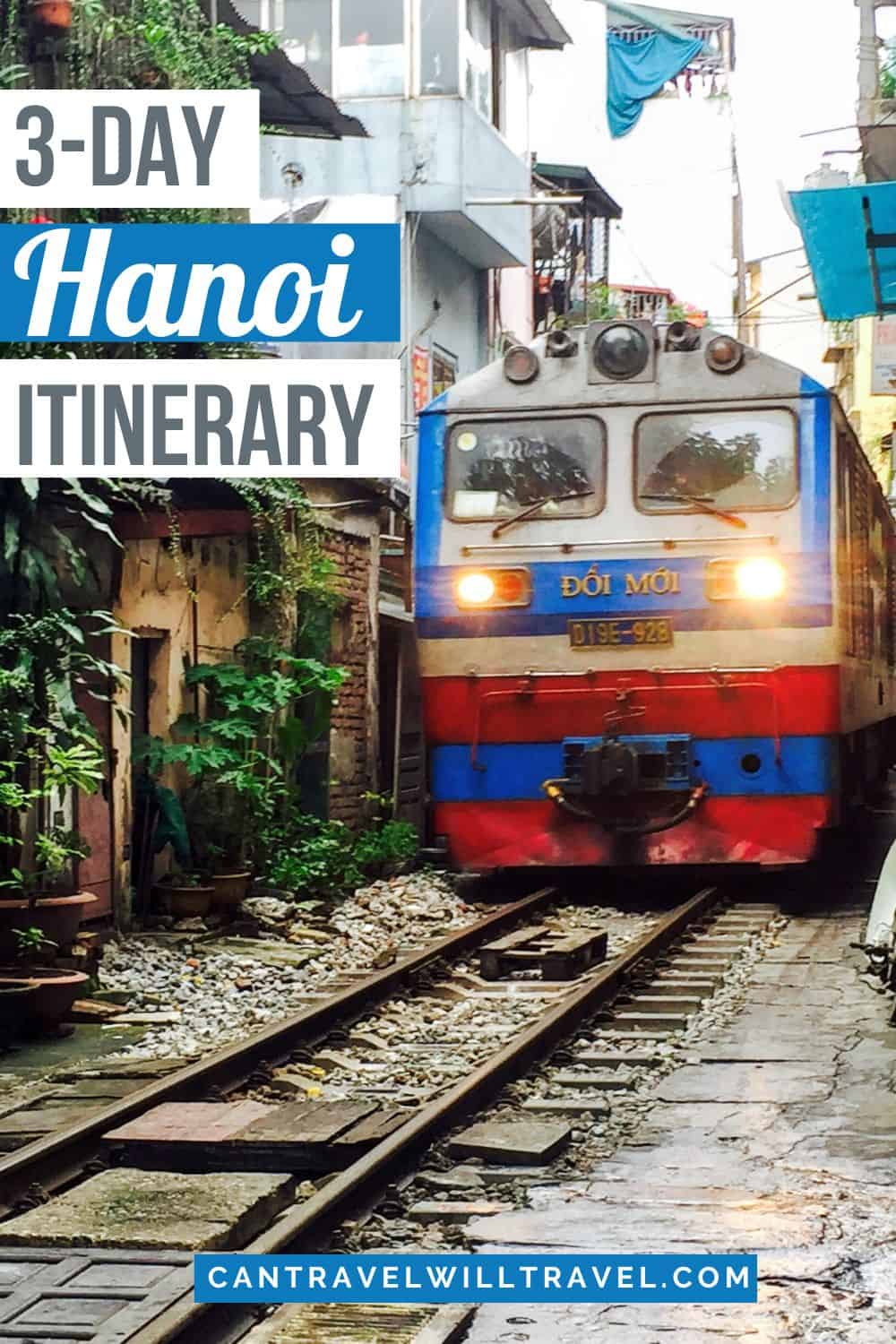
Hanoi is chaotic, colourful, noisy and full of flavour. It can feel overwhelming when you first arrive, but that energy is also what makes the city so memorable.
This 3-day Hanoi itinerary is designed for first-time visitors who want to see the main sights, explore the Old Quarter, try some of the city’s best-known dishes and still have time to slow down. It combines busy mornings with more flexible afternoons, plus evenings built around Hanoi’s food and street life.
I started my own Vietnam trip in Hanoi and stayed in the Old Quarter. The traffic, tiny plastic stools, street kitchens and maze of narrow lanes all hit me at once, but after a little time to adjust, I loved the atmosphere.
This itinerary assumes you have three full days in Hanoi, although you can easily adapt it if you arrive late, leave early or prefer a gentler pace.
Affiliate Link Disclosure: This post contains affiliate links. If you use them to make a purchase, we may earn a small commission at no extra cost to you. As an Amazon Associate, we earn from qualifying purchases. Learn more in our Affiliate Link Disclosure.
3-Day Hanoi Itinerary at a Glance
Day 1: Explore the Old Quarter, walk around Hoan Kiem Lake, visit St Joseph’s Cathedral and take a street food tour.
Day 2: Visit the Ho Chi Minh complex, Temple of Literature and a museum, then take a look at Train Street, before watching a water puppet show.
Day 3: Cross Long Bien Bridge, browse a local market, try chả cá La Vong, and spend the afternoon around West Lake.
How to Spend 3 Days in Hanoi
This itinerary is based on what I did during my time in Hanoi, with a few extra suggestions that I’d add on a return visit. You can mix and match the stops according to your arrival time, onward plans, and interests.
If you arrive the evening before, I’d recommend keeping things simple with a bowl of pho. On my first night in Hanoi, friends who lived there took me to eat pho on a street corner. It was a delicious, simple and memorable introduction to Vietnam.
Getting from Noi Bai Airport to central Hanoi is fairly straightforward, with options that may include buses, shared vans and private transfers. You can compare the available city transport options and book through 12Go before you travel.
Day 1 Hanoi Itinerary – Old Quarter and Street Food
Start your first day in Hanoi by getting your bearings in the Old Quarter. It’s busy, confusing and sometimes overwhelming, but it’s also the ideal place to begin exploring Hanoi. End the day with a street food tour and an introduction to some of the city’s best-known dishes.
Explore Hanoi Old Quarter
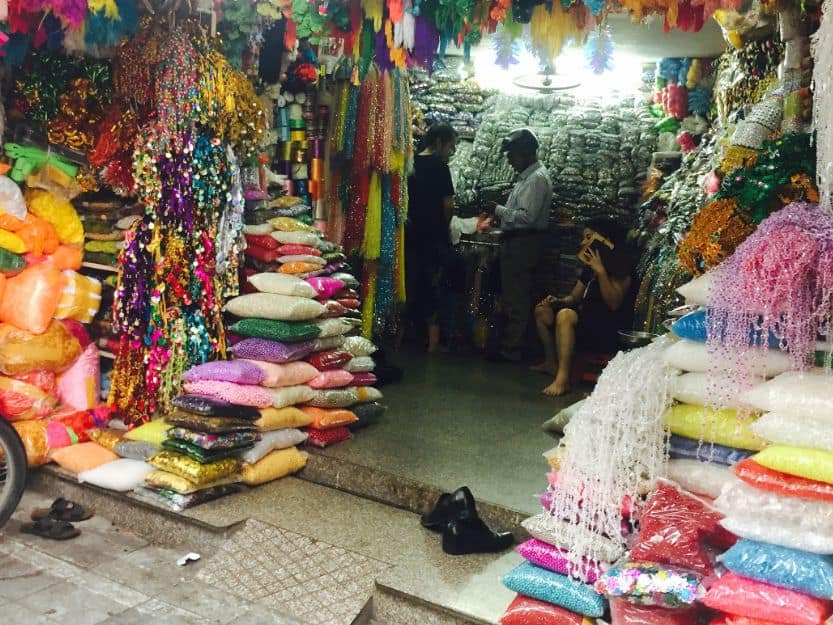
The Old Quarter is the historic heart of Hanoi and one of the most atmospheric parts of the city. It’s a maze of narrow streets, old tube houses, tiny shops, street food stalls, cafes, motorbikes, and vendors carrying baskets of fruit.
On my first proper morning in Hanoi, I stepped out of my hotel and was immediately hit by the noise and bustle. Horns were blaring, scooters were weaving in every direction, and the pavements were almost impossible to walk along because they were being used for cooking, eating, parking motorbikes, and selling just about everything.
It felt completely chaotic at first, but that’s also part of Hanoi’s charm. The trick is not to rush. Pick a few streets, wander slowly, stop often, and let yourself get a little lost.
Many streets in the Old Quarter were traditionally linked to a particular trade. You’ll still come across streets selling silver, bamboo, fabric, mirrors, herbs, shoes, and all kinds of household goods. The old trade divisions are less strict now, but there’s still a real sense of each street having its own character.
A few Old Quarter streets and areas worth looking out for include:
- Hang Bac Street for silver shops and jewellery
- Hang Gai Street for silk and souvenirs
- Ta Hien Street for bars, beer and evening buzz
- Lan Ong Street for traditional medicine shops
- Dong Xuan Market for a busy local market experience
Don’t worry too much about ticking off every street. The Old Quarter is best experienced by walking, watching, and stopping wherever catches your eye.
Walk Around Hoan Kiem Lake
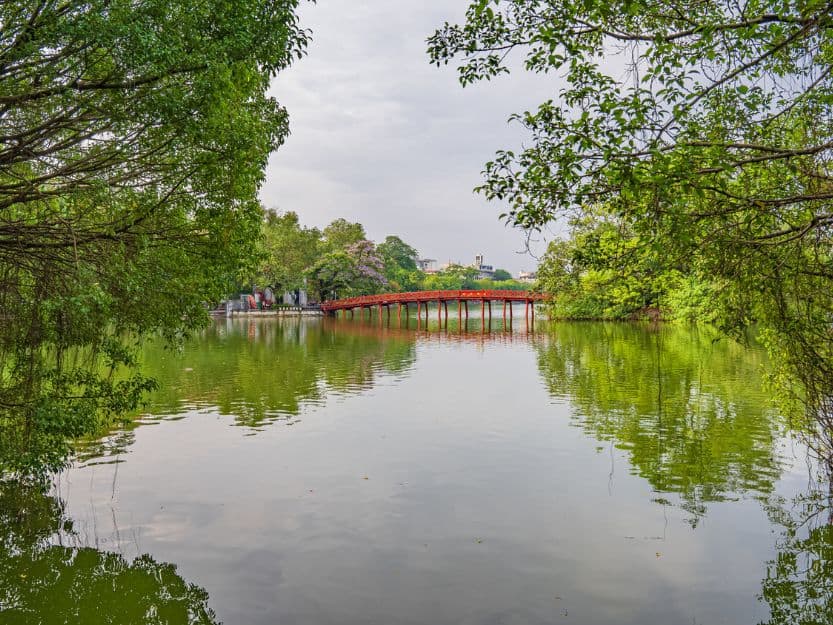
After exploring the Old Quarter, head towards Hoan Kiem Lake. This is one of the easiest places to pause and catch your breath in central Hanoi. The lake’s especially lovely early in the morning when locals are exercising, walking, stretching, dancing, or simply sitting by the water.
If you’re not an early riser, it’s still worth visiting later in the day, especially around sunset when the lights start to come on. As you walk around the lake, look out for Turtle Tower, or Tháp Rùa, which sits on a tiny island in the middle of the water.
Cross the bright red bridge to Ngoc Son Temple, which sits on a small island in the lake. It’s not a huge site, but it’s peaceful and easy to combine with a walk around the water.
Hoan Kiem Lake is also a useful landmark when you’re trying to work out where you are in the city. In a place where every lane seems to lead to another busy lane, this helps more than you might expect.
Stop by St Joseph’s Cathedral
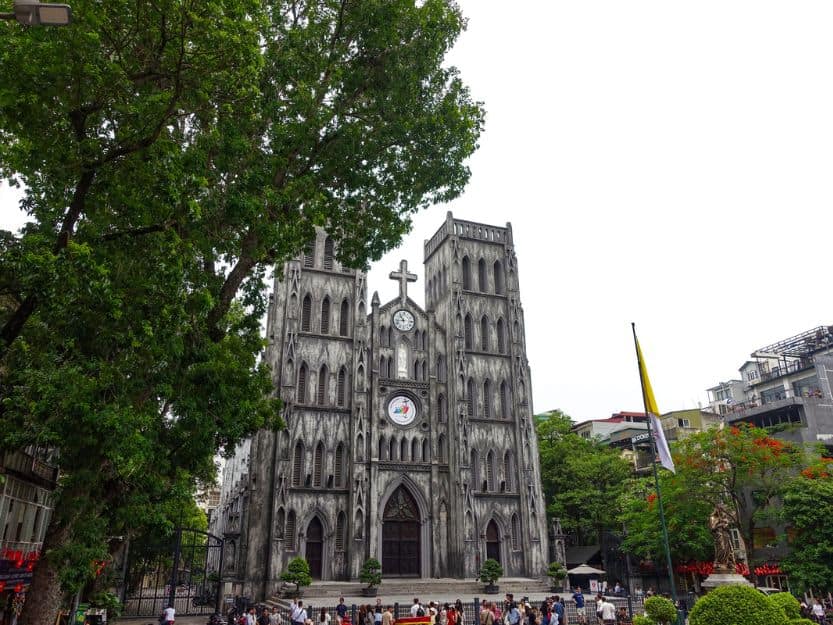
From Hoan Kiem Lake, it’s an easy walk to St Joseph’s Cathedral, one of Hanoi’s most recognisable landmarks. You don’t need long here, but it’s worth stopping by to see the neo-Gothic facade and the busy little streets and cafes around it.
The area is also a good place for a short break before diving back into the Old Quarter or continuing your coffee and street food discovery.
Try Your First Vietnamese Coffee
Vietnamese coffee is a must on any Hanoi itinerary. Even if you’re not usually a big coffee drinker, it’s worth trying at least once.
My first Vietnamese coffee was in the Old Quarter during a sudden downpour. I ducked into a small cafe on a street corner and managed to grab a tiny plastic seat just as someone else left. I ordered coffee with milk and wasn’t quite prepared for how strong it would be.
It was dark, almost chocolatey and very intense, but once I got over the initial hit, I really enjoyed it. Vietnamese coffee is often served with condensed milk, which gives it a sweet, rich flavour. Many cafes also serve it with a small glass of tea on the side, to take the edge off if need be.
Cafe culture in Hanoi is brilliant, so don’t just grab one coffee and move on. Build in time to sit, people watch, and recover from the traffic.
Take a Street Food Tour
If you only book one organised activity in Hanoi, make it a street food tour. Hanoi’s food scene is one of the best parts of the city, but on a first visit, it can be hard to know where to start, what to order, or how to eat some dishes properly.
I did a motorcycle street food tour on my first evening in Hanoi. As much as I wanted to try as many local dishes as possible, I was hesitant about getting on the back of a motorbike in Hanoi’s traffic. It looked chaotic from the pavement, so being in the middle of it felt like a big step up.
Thankfully, my guide was experienced, confident, and instantly put me at ease. After putting on our helmets, we started with a ride around the Old Quarter before heading out across Long Bien Bridge. We visited several food and drink stops, including places serving bun cha, crab spring rolls, egg coffee and a local dessert.
I loved trying so many different foods, but the tour was about more than just eating. Weaving in and out of Hanoi’s traffic was exhilarating and slightly scary, and chatting with the guides made the evening even better. I recommend it as the perfect end to your first day in Hanoi.
The next few food stops in this itinerary were places I visited as part of that tour, but you could easily seek them out independently too. They deserve a bit more detail because they were some of the food and drink experiences that made the biggest impression on me in Hanoi.
A walking food tour is a good alternative if you do not want to get on the back of a scooter. Either way, be sure to turn up hungry.
Drink Egg Coffee at Cafe Giang
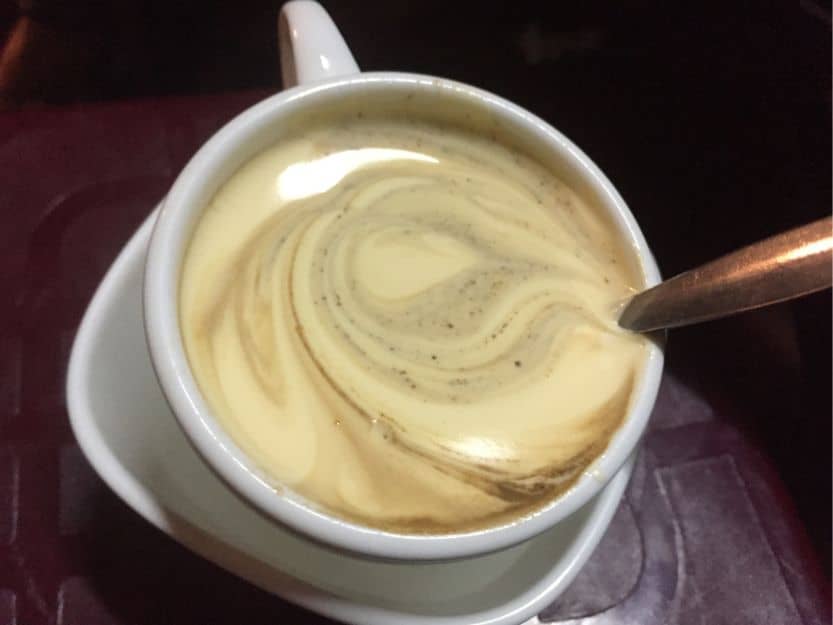
Egg coffee sounds odd, but it’s one of the best things to try in Hanoi. It’s made with strong Vietnamese coffee topped with a creamy whipped egg mixture, and it tastes more like a dessert than a drink.
Cafe Giang is one of the most famous places to try it. The entrance is easy to miss, tucked down a narrow passageway, but that is part of the experience. When I visited, we walked through a long corridor, climbed upstairs, and sat at a low wooden table while I waited for my coffee.
I wasn’t convinced before trying it because I couldn’t imagine egg working in coffee. Luckily, the taste was nothing like I’d expected. It was more like a thin, frothy custard sitting on top of strong dark coffee.
It’s rich, sweet, and definitely worth trying at least once.
Eat Bun Cha for Lunch or Dinner
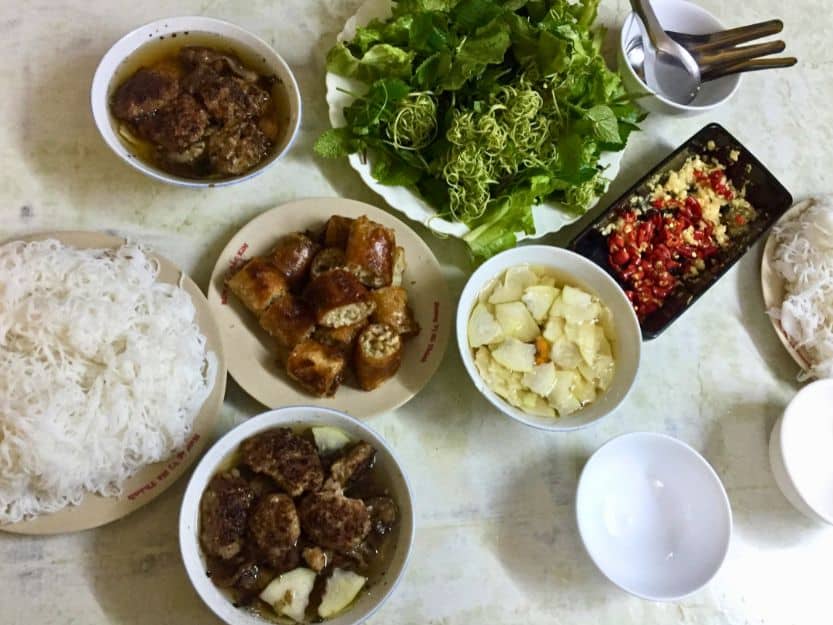
I tried bun cha at Bun Cha Nem Cua Be Dac Kim during my street food tour. It was served with grilled pork patties and slices of pork in a savoury dipping broth, alongside vermicelli noodles, herbs and condiments that our guides showed us how to combine.
My chopstick skills made the noodles more entertaining than graceful, but the meal was delicious. We also had deep-fried crab spring rolls, which were some of the best spring rolls I ate in Vietnam.
This was one of the stops on my particular tour, so other food tours may visit different restaurants. You can also seek out bun cha independently at one of the many busy local places around the Old Quarter.
Try a Vietnamese Dessert
Why not finish off your first day in Hanoi by trying a Vietnamese dessert? Many local dessert spots serve che, a sweet dish that can include ingredients such as coconut milk, fruit, jelly, beans, ice and syrup.
I tried che thap cam, a mixed version with coconut milk, beans, jelly, ice and syrup, during my street food tour. It was a little too sweet for my taste, but it was still fun to try something completely different.
If you’ve got a sweet tooth, che is worth a taste. If not, you could finish the evening with a cold bia hoi, Hanoi’s fresh local draft beer.
Day 2 Hanoi Itinerary – History, Culture, and Train Street
Your second day in Hanoi is a good time to visit some of the city’s most important historic and cultural sights. This day involves a bit more sightseeing, so start early if you can.
Aim to visit the Ho Chi Minh complex in the morning, continue to the Temple of Literature before or after lunch, and choose one museum for the afternoon.
Visit the Ho Chi Minh Mausoleum
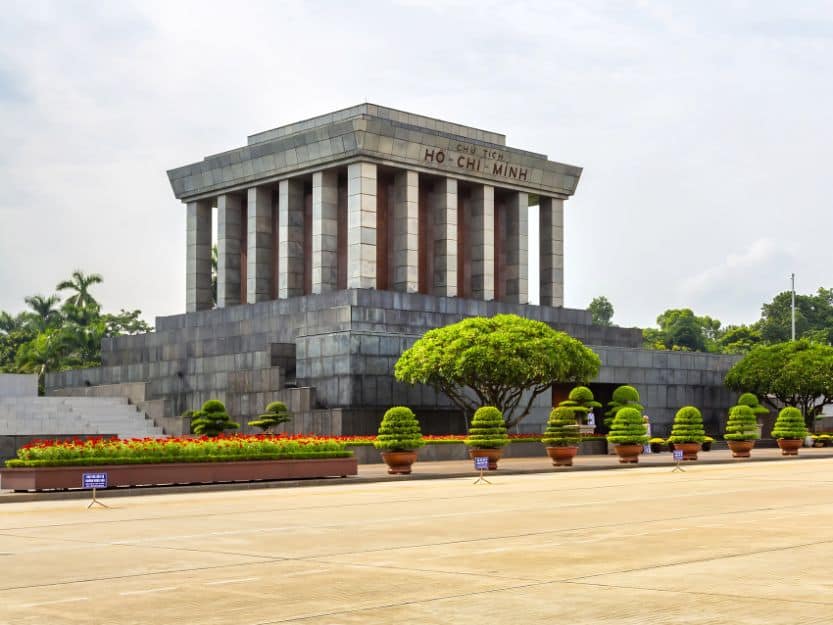
Begin your second day at the Ho Chi Minh Mausoleum in Ba Dinh Square. It is one of Vietnam’s most significant ceremonial sites and feels very different from the busy streets of the Old Quarter.
The mausoleum is generally open on selected mornings rather than throughout the day, and entry procedures are strict. Dress modestly, keep shoulders and knees covered, avoid bringing large bags, and follow instructions from staff.
Opening days and hours can change, and the mausoleum normally closes for a period of annual maintenance, so check the latest information before your visit. Even when the interior is closed, you can still see the exterior and explore other parts of the complex.
Explore the Ho Chi Minh Complex
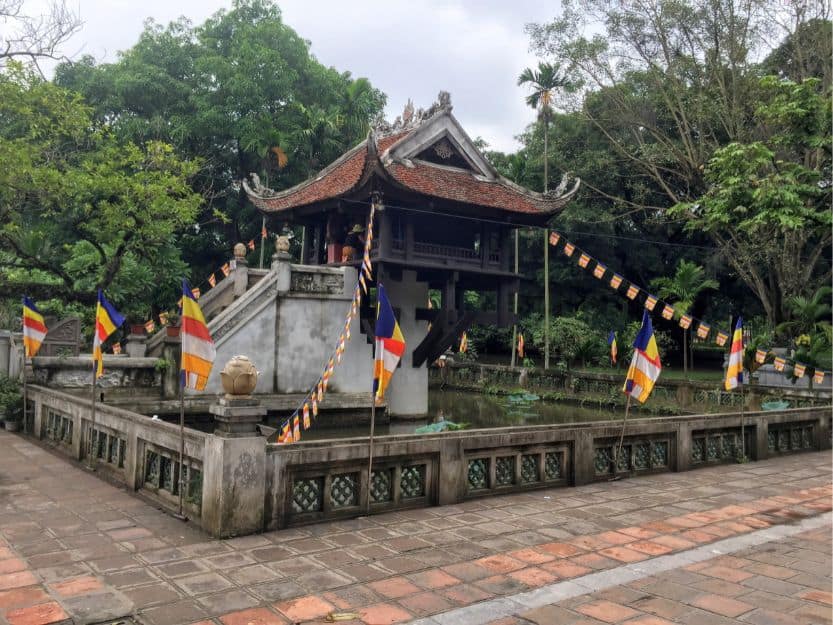
After the mausoleum, spend time exploring the wider Ho Chi Minh complex. Depending on your interests and timings, you can visit:
- Ho Chi Minh’s Stilt House
- The Presidential Palace grounds
- The Ho Chi Minh Museum
- One Pillar Pagoda
The One Pillar Pagoda is small, but it’s one of Hanoi’s most recognisable temples. It’s easy to visit as part of the same morning and doesn’t take long.
This area is calmer and more spacious than the Old Quarter, so it makes a good contrast after your first day in Hanoi.
Visit the Temple of Literature
Next, head to the Temple of Literature. This is one of the most beautiful and peaceful places to visit in Hanoi.
The Temple of Literature was founded as a Confucian temple and later became Vietnam’s first national university. It has courtyards, gardens, old gateways, stone stelae and traditional architecture, making it a lovely place to slow down and absorb a different side of the city.
Allow around an hour here, or longer if you enjoy photography or quieter historic sites.
Before your museum visit, keep lunch simple with something quick nearby. Bánh mì is a good option if you don’t want to lose too much sightseeing time. This Vietnamese baguette sandwich usually comes with meat, pickled vegetables, herbs, chilli and often pâté.
I skipped bánh mì in Hanoi because pâté is not my thing, but you can usually ask for one without it or look for versions with egg, tofu, grilled meat or vegetables instead.
Explore a Museum
Hanoi has several museums, and it’s worth choosing one rather than trying to cram in too many.
Hoa Lo Prison is one of the most powerful and sobering options. It’s not a light visit, but it gives important context to Hanoi’s history and is a worthwhile stop if you want to understand more than just the city’s surface.
The Vietnamese Women’s Museum is another good choice, offering thoughtful exhibitions on women’s roles in Vietnamese history, family life, work, and wartime.
The Vietnam Museum of Ethnology is a good option if you are interested in Vietnam’s ethnic groups, culture and traditional houses. It’s a little further out, so allow extra travel time.
Pick the museum that best matches your interests and energy levels. This is a full day already, so there’s no need to force in everything.
Experience Hanoi Train Street
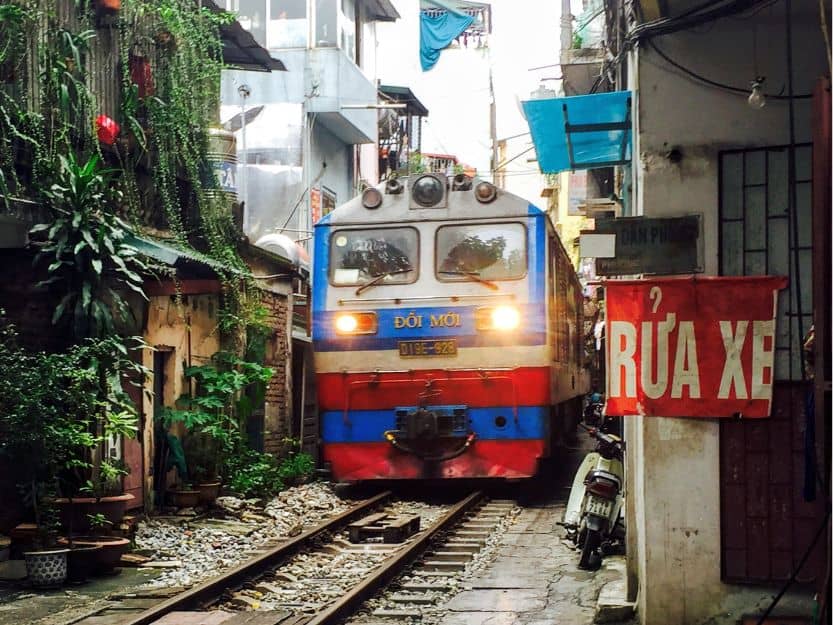
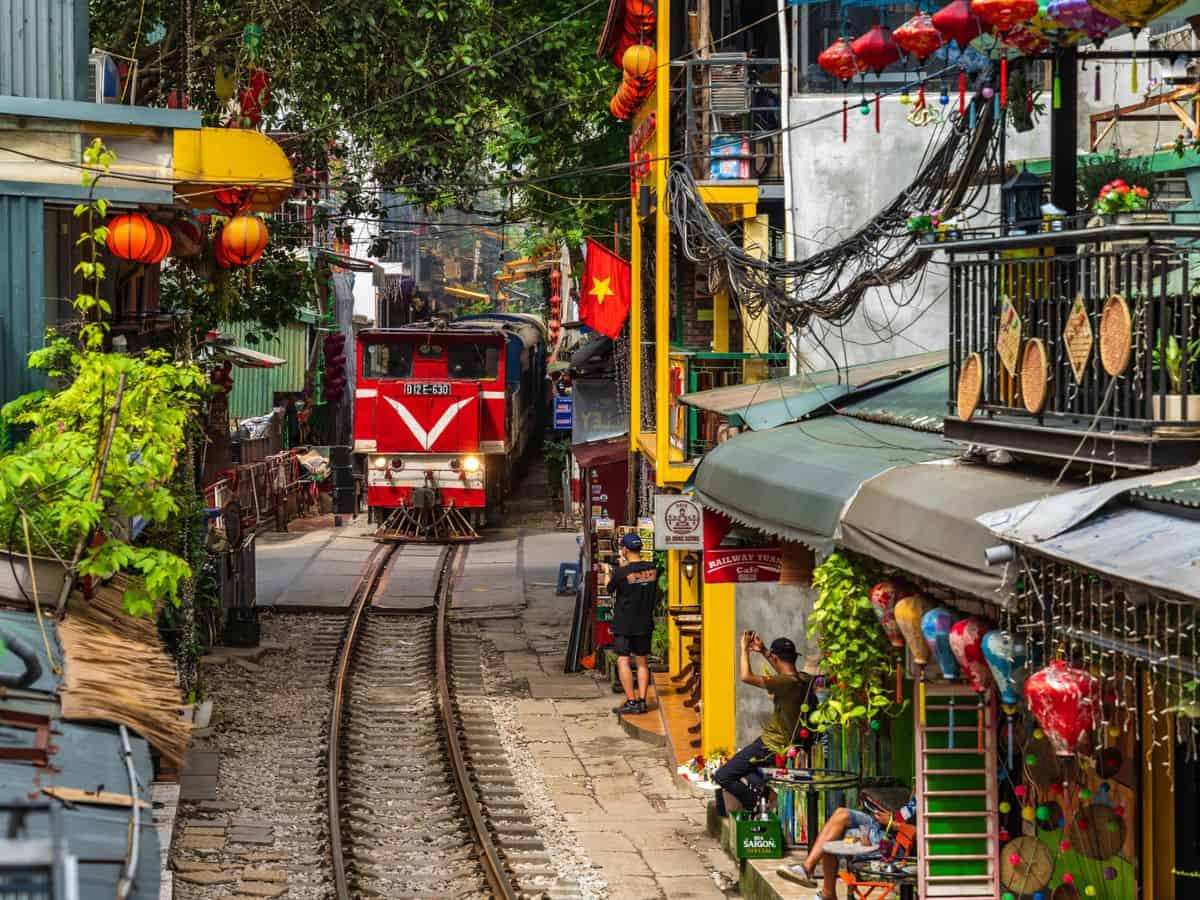
Hanoi Train Street is a narrow residential railway corridor where trains pass extremely close to homes and cafes. It has become one of the city’s most photographed places, but it remains a working railway rather than a formal visitor attraction.
Access arrangements have changed repeatedly, and you shouldn’t assume that you can walk freely along the tracks. Barriers, police controls and permitted entry points can vary, sometimes from one section of the railway to another.
Check the situation locally on the day of your visit. Only enter where access is clearly allowed, follow police and railway staff instructions, and never climb over a barrier or walk onto the tracks independently.
Avoid relying on train times published in old blog posts or social media videos. Railway schedules and local access arrangements can change, so ask your accommodation or a reputable local guide for current information.
When I visited, access was much more casual than it is now. I still think Train Street is well worth trying to see, but it’s important to know that entry can’t be guaranteed.
If you’re able to visit, treat it as a bonus. If access is restricted, at least you’ll have been prepared rather than building the rest of your day around it and leaving disappointed.
Watch a Water Puppet Show
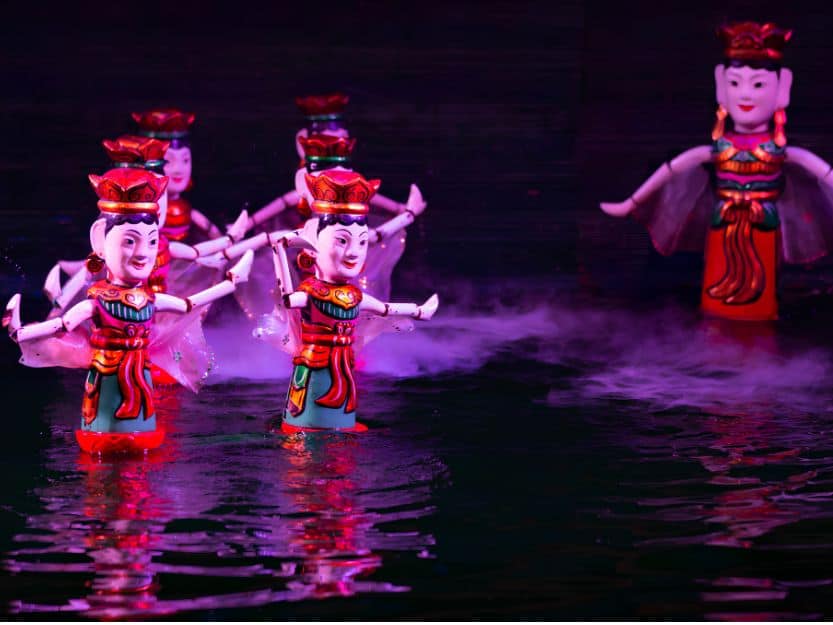
End your second day with a traditional water puppet show. The Thang Long Water Puppet Theatre near Hoan Kiem Lake is the most convenient option for most visitors.
Water puppetry is a traditional Vietnamese art form, with puppets performing on water accompanied by live music. Even if you don’t understand the language, the show is visual, colourful, and easy to enjoy.
It’s also a good evening option if you are tired from walking and want something cultural that doesn’t involve another late night.
Afterwards, wander back through the Old Quarter for dinner or a drink.
Day 3 Hanoi Itinerary – Markets and Local Life
By day three, you’ll probably have a better feel for Hanoi’s pace. This is a good day to explore beyond the most obvious sights, revisit favourite areas, or leave more room for spontaneous stops.
Walk Across Long Bien Bridge
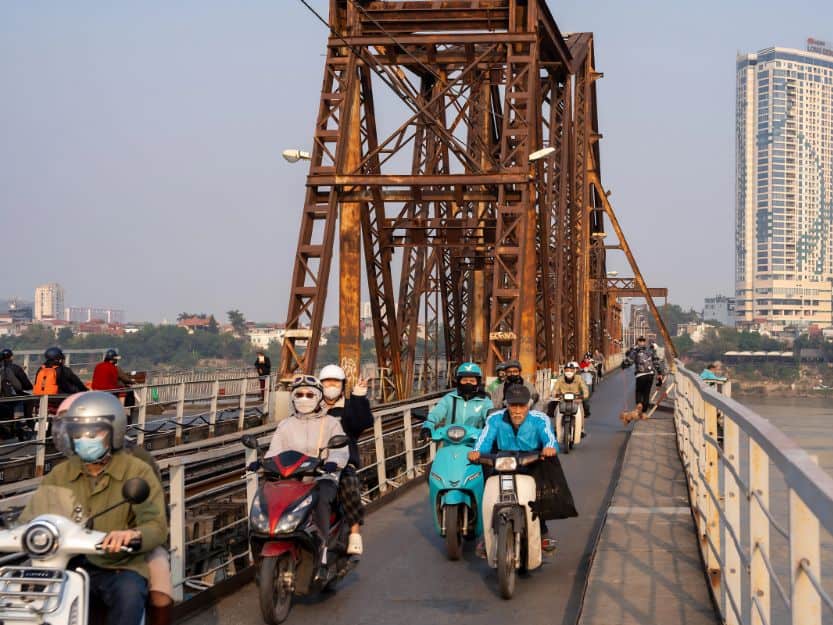
Long Bien Bridge was one of the highlights of my first visit to Hanoi. It spans the Red River and has railway tracks through the middle, with narrow lanes for motorbikes and bicycles on either side.
I first crossed it on the back of a motorbike during my street food tour. It was busy, noisy and a little nerve-racking, but also brilliant. Returning on foot gives you more time to take in the views and notice details that are easy to miss when riding across.
The bridge feels gritty and lived-in, with views over the river, passing trains and local vendors.
Pedestrians can walk along parts of the bridge, although you need to stay alert. It is a working bridge rather than a polished tourist attraction, which is exactly why it’s so interesting.
If your street food tour does not include Long Bien Bridge, this is a great opportunity to experience it. If you’ve already crossed by motorbike, walking part of it still feels quite different. Go early in the morning or later in the afternoon if you want softer light for photographs.
Visit a Local Market
After Long Bien Bridge, visit one of Hanoi’s local markets. Dong Xuan Market in the Old Quarter is the most obvious choice, especially if you want somewhere central and easy to fit into your itinerary.
It’s large, busy and more practical than pretty, with clothes, household goods, snacks, dried foods, souvenirs and all sorts of everyday items. The streets around the market are often just as interesting as the market itself.
For a more local, food-focused experience, you could visit a smaller neighbourhood wet market instead. Go early if you want to see it at its liveliest.
Hanoi’s markets can be a bit intense, but they are excellent places for people watching and seeing a more everyday side of the city.
Try Cha Ca La Vọng for Lunch
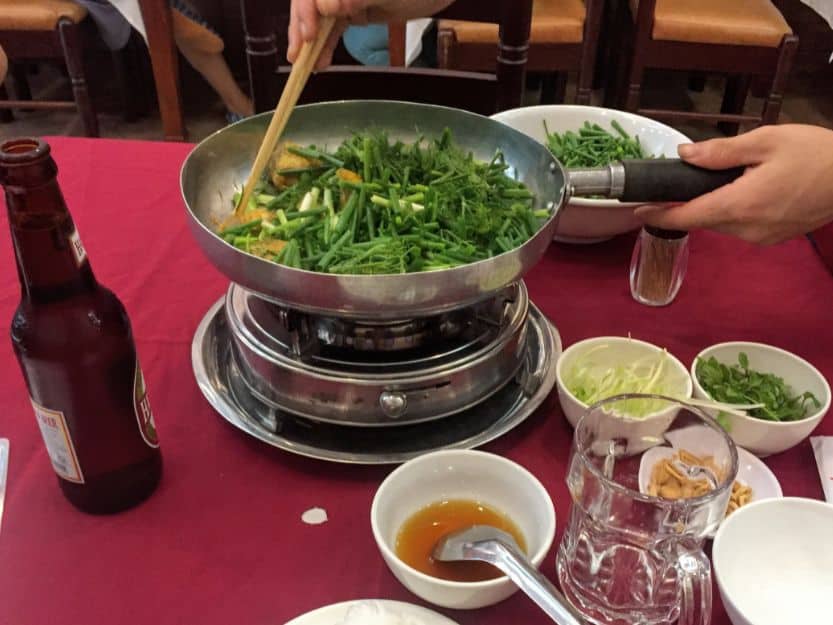
For lunch on your final day in Hanoi, try cha ca La Vọng, one of the city’s most famous dishes and a bit of an experience in itself.
It’s a turmeric-marinated fish dish, usually served with lots of dill and spring onions, rice noodles, herbs, peanuts and dipping sauce. Part of the fun is the way it’s served, with the fish and herbs brought to the table in a hot pan so you can finish cooking and assembling it yourself.
I tried this dish on my last day in Hanoi at Cha Ca La Vọng, the well-known restaurant at 14 Cha Ca Street in the Hoan Kiem District. The restaurant specialises in this one Hanoi dish, so ordering is fairly straightforward even if you’re visiting alone.
It’s a very ‘Hanoi’ food experience and a good one to add if you want to try something beyond pho, bun cha and banh mi.
Spend Time Around West Lake
If you want a more relaxed afternoon, head to West Lake. This area is much more spacious and chilled than the Old Quarter, with lakeside cafes, temples, restaurants, and quieter streets.
Tran Quoc Pagoda, on a small island near the lake’s edge, is one of the main sights in the area. You can combine it with a walk along the water and a long coffee stop.
West Lake is also a good option if you’ve been travelling for a while and need a break from constant sightseeing. Not every hour in Hanoi has to be packed.
Or Keep Your Final Day Flexible in the Old Quarter
If you’d rather stay central, use the afternoon to revisit the Old Quarter without a strict plan.
Go back for another egg coffee, try a new dish, shop for souvenirs, or sit on a corner with a drink and watch the city unfold around you.
Some of my best Hanoi memories are not from the main sights and attractions. They’re from weaving through narrow streets, dodging scooters, and watching street vendors cook on the pavement.
More Things to Do if You Have Longer in Hanoi
If you have more than three days in Hanoi, you could also spend some time exploring the French Quarter, where wider streets and colonial-era buildings provide a contrast to the Old Quarter.
You could also visit Bach Ma Temple, one of the Old Quarter’s oldest temples, or the Heritage House on Mã Mây Street for a look inside a restored traditional merchant’s home.
Ninh Binh is another popular option from Hanoi, although I think it deserves more than a rushed day trip if your wider Vietnam itinerary allows.
If you’re planning to travel beyond Hanoi, the 12Go app in ChatGPT can help you research the different ways to reach your next destination. You can ask about trains, buses, ferries, flights and combined routes, compare journey times and connections in one conversation, then use the 12Go website to check the latest routes, schedules and booking details.
I used them to book my onward travel from Hanoi to Cat Ba Island for an untouristy Ha Long Bay tour, with the journey combining a coach and ferry. It was easy to arrange, reliable and comfortable.
Where to Stay in Hanoi
Hanoi has a huge variety of hotels, hostels and guesthouses, but for a first visit I’d recommend staying in or around the Old Quarter or Hoan Kiem area. Both are convenient for the lake, cafes, street food, markets and many of the places included in this itinerary.
I stayed in the Old Quarter, which was ideal for exploring on foot. It is busy and atmospheric, but it can also be noisy, so check recent reviews carefully if you are a light sleeper.
Three days in Hanoi gives you enough time to see the main sights, eat extremely well and experience several different sides of the city. This itinerary balances the historic landmarks around Ba Dinh with the narrow streets of the Old Quarter, the food and coffee culture, and a slower final afternoon around West Lake.
The itinerary I’ve suggested is deliberately flexible. Opening times, traffic and weather may change how each day unfolds, so leave a little breathing room and don’t worry if you miss a stop. Some of my favourite Hanoi memories came from unplanned moments, whether that was sheltering from the rain with a strong coffee, sitting on a tiny pavement stool, or simply watching the city move around me.
So, if you’re planning a visit to Hanoi, which part of this itinerary would you most like to experience?
Planning Your Trip to Hanoi?
Planning your trip to Hanoi in Vietnam? Here are some of our recommended useful resources to help you have the best time possible.
|
● TRAVEL INSURANCE IS AN IMPORTANT CONSIDERATION! World Nomads offers cover for travellers in over 100 countries, and True Traveller is a great option if you’re from the UK or EU. SafetyWing is another solution, particularly for digital nomads and long-term travellers. ● Find amazing flight deals on Skyscanner, Kayak, and AirAsia. ● Booking.com and Expedia usually have the best hotel prices. ● Our go-to for self-catering accommodation is Vrbo. ● Book buses, ferries and taxis with 12Go. ● Discover fantastic trips and activities with Klook, Viator and GetYourGuide. ● Check out Bookmundi, G Adventures, and Intrepid Travel for group holidays and tours. |
| Read More Vietnam Wildlife and Trekking Tour in Phong Nha-ke Bang National Park |
Enjoy this post? Pin it for later!